
A Five-Question Test Before Following TikTok or any Online Dental Advice
In the age of the Internet and social media outlets, all with information on every subject imaginable, is there a way to know or qualify what is accurate and useful versus what is not. Orthodontics is a field that it may surprise some, has thousands of posts, videos and queries about teeth and making them straight.
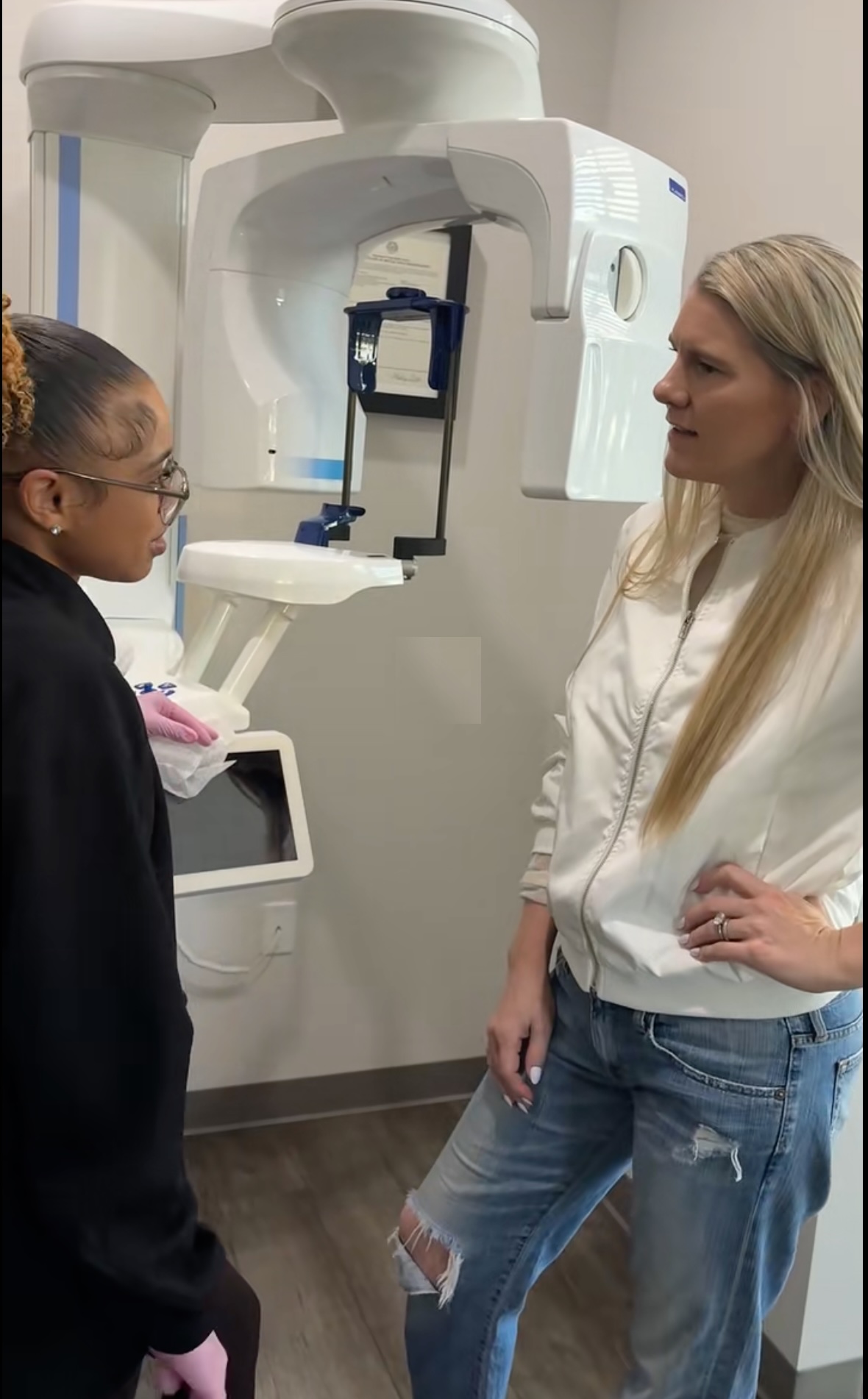
Dr. Bryn Cooper of Cooper Orthodontics in Houston, TX has a five question list to make such a determination.
- Is the person giving the advice a qualified dental professional?
This seems like a no-brainer. Why would anyone consider dental, orthodontic or any other type of medical advice from someone who was not qualified? There are plenty of reasons. Traditionally, someone earned authority through education, licensing, experience and professional accountability. Online, a person can appear authoritative because an algorithm repeatedly shows their content. Repetition creates familiarity, and familiarity can feel like truth.
In dentistry and orthodontics, this is especially risky because viewers may not understand that similar-looking problems can have very different causes. A video can show what happened to one person, but it cannot examine the viewer’s teeth, gums, bite, jaw, bone structure, health history or X-rays.
In other instances, discovering the most qualified is not the goal. Accessibility, confidence, familiarity and emotional appeal are influential. Price can also be an influence and factor in when choosing an orthodontist.
- Does the recommendation involve moving, filing, gluing to or permanently changing teeth?
If the answer is yes, stop before doing anything. A social-media trend may look simple on a screen, but teeth are not pieces of plastic that can safely be reshaped, repositioned or decorated at home.
Moving a tooth involves much more than changing the position of the part you can see. A tooth is supported by its root, ligaments, gum tissue and surrounding bone. Orthodontic treatment applies carefully controlled pressure so that these supporting structures can adjust as the tooth gradually moves. That process requires diagnosis, planning and professional monitoring.
Filing or shaving a tooth may remove enamel, which the body cannot naturally replace. Gluing gems, artificial braces or other objects to teeth may damage the enamel, trap plaque, irritate the gums or affect the way the upper and lower teeth meet. Even professionally placed veneers are considered irreversible because some enamel may need to be removed. The American Dental Association warns that do-it-yourself dentistry can contribute to receding gums, bone loss, bite problems, jaw pain, tooth loss and other potentially permanent damage.
“Moving teeth, gums and bones around inside the human skull is a complex process that should never be approached lightly,” according to Dr. Cooper. “If the source of this recommendation is not a licensed dentist or orthodontist who has examined you, it is probably best to ignore it and seek more qualified guidance.”
Before following the recommendation, show the video, product or instructions to a dentist or orthodontist. Ask what the procedure could permanently change and whether it could affect the enamel, roots, gums, bone or bite. “It is much safer to ask before trying something than to seek help after damage has occurred,” Dr. Cooper said.
- Does it Promise the Same Result for Everyone?
If it does, move on.
Two people may appear to have the same crooked tooth, gap or overbite and still require entirely different treatment. What appears in a photograph or short video does not reveal root position, jaw relationships, bone support, gum health, impacted teeth or the way all the teeth come together when a person bites.
A qualified orthodontist develops a treatment plan after evaluating the patient’s teeth, gums, jaws, facial structure and bite. X-rays or other dental imaging may be necessary to see conditions that cannot be detected from a selfie, impression kit or video. The American Association of Orthodontists describes an in-person consultation and appropriate imaging as important parts of obtaining a complete picture and creating a tailored treatment plan.
“No fingerprints are the same, and no two sets of teeth or bones are either,” Dr. Cooper said. “There is no one-size-fits-all answer in orthodontics. Every mouth and every bite are different. A promise of the same outcome for everyone is a red flag.”
A company or content creator who cannot explain why the recommendation is appropriate for one particular patient is not offering individualized care.
- Does it Claim to Work Faster than Professionally Supervised Treatment?
A promise of exceptionally fast results should lead to questions, not excitement.
Some orthodontic problems can be treated more quickly than others. However, treatment time depends on the complexity of the problem, the movements required, the condition of the teeth and supporting tissues, and the patient’s response and cooperation. The American Association of Orthodontists advises that teeth should move in a controlled way so the bite is stable and the result lasts; cutting corners simply to pursue speed can increase risk.
A before-and-after video may show that the front teeth look straighter, but it may not show what happened to the bite, roots or back teeth. “Cosmetic movement is not necessarily complete orthodontic treatment,” Dr. Cooper said. The purpose of orthodontics is not merely to line up the visible teeth; it is to create a healthy bite in which the upper and lower teeth function properly together. This requires an infrastructure that supports all the patients’ teeth, bone, muscles and tendons. It is not for amateurs. “Faster is not necessarily better when the treatment involves living tissue,” Dr. Cooper said. “The goal is not to move teeth as quickly as possible. The goal is to move them safely, place them correctly and create a bite that is healthy, functional and stable.”
A legitimate provider should be able to explain both the expected treatment time and the biological or clinical reasons behind it. Speed alone is not evidence that a treatment is safer, more advanced or more effective.
5. How Can Patients Spot Treatments that Only Solve Short-Term Issues?
A treatment may seem successful because a tooth looks straighter, a gap appears smaller or a smile change quickly. But a visible improvement does not always mean the underlying problem has been properly diagnosed or corrected.
Teeth function as part of a larger system that includes the bite, roots, gums, jawbones and surrounding tissues. A treatment that focuses only on what can be seen may ignore how the upper and lower teeth fit together, whether the roots are moving safely or whether the gums and bone can support the change.
Patients should be cautious when a product or recommendation promises a quick cosmetic result but does not explain how it will affect the entire mouth. Another warning sign is the absence of an examination, X-rays, follow-up care or a plan for maintaining the result. Teeth can shift back, bites can become less stable and untreated problems may continue even when the smile appears improved.
“A short-term cosmetic change is not the same as a healthy, lasting result,” Dr. Cooper said. “Orthodontic treatment should address how the teeth look, how they function and how they will remain stable over time. If a recommendation only focuses on the quickest visible change, patients should ask what is being overlooked.”
Before beginning any treatment, patients should ask what problem it is intended to solve, whether it addresses the entire bite and how the result will be monitored and maintained. They should also ask what could happen several months or years later—not just what the teeth might look like next week.
The central question is not simply, “Will this make my teeth look better quickly?” It is, “Will this produce a safe, healthy and lasting result?”
Cooper Orthodontics Call to Action
Have a question? Send it to Dr. Cooper! She might answer it in a future video!
About Cooper Orthodontics
Cooper Orthodontics provides orthodontic care for children, teens and adults in Houston and Lake Jackson, Texas. Led by Dr. Bryn Cooper, the practice offers braces, clear aligners and remote monitoring for appropriate patients, with a focus on creating confidence through smiles. In Houston please call 832.925.8721. In Lake Jackson, TX and southern Brazoria County please call 979-297-0000.